
Question · Cooling
Why Isn't My AC Cooling? AC Repair Answers for Spotsylvania Homes
An AC that runs but will not cool in a Spotsylvania home: the register check that splits airflow from heat transfer, and where homeowner work has to stop.
The next move, in order
Three things, in this sequence, before anyone gets paid to look.
First, put your hand flat over a supply register with the system running. Strong cold air means the equipment is largely working and the problem is distribution. Weak cold air means airflow. Room-temperature air at full force means the outdoor unit is not doing its half of the job.
Second, pull the filter. A filter packed solid will starve a coil until it freezes into a block of ice, and a frozen coil produces exactly the symptom that brings people here: the system runs constantly and the house stays warm. If the filter is grey and stiff, replace it, switch the system to fan only, and give it two hours to thaw before judging anything.
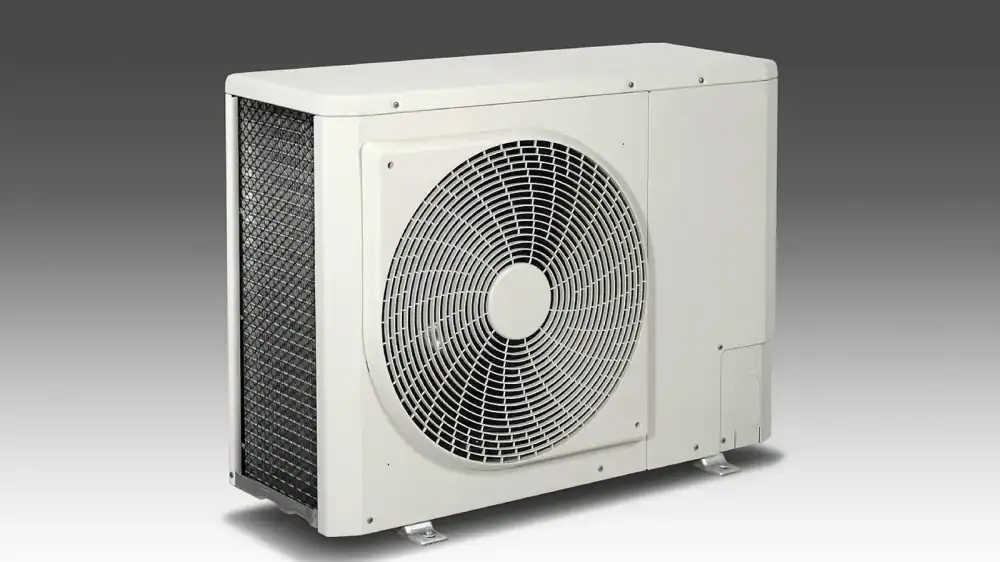
Third, walk out to the condenser. It should be spinning, warm on top, and clear of grass clippings and cottonwood on all four sides. A unit humming without the fan turning, or one buried in debris, explains a great deal on its own.
If all three check out and the house is still warm after a full cycle, the remaining causes are refrigerant charge, a failing compressor, or a control fault. Those need a licensed technician with a gauge set. Stop there.
The question, stated precisely
The question that arrives is usually "my AC is broken," but the useful version is narrower: the system powers on, the indoor blower runs, air moves through the vents, and the house still will not come down to setpoint on a normal Spotsylvania afternoon.
That is a different problem from a system that will not start at all, which is nearly always a breaker, a float switch on a full condensate pan, or a thermostat with dead batteries. It is also different from a system that cools some rooms and not others, which is a duct and balance question rather than an equipment question. This page covers the middle case, because it is the one where homeowners most often pay for a visit they did not need — or delay one they badly did.
A field note on Spotsylvania houses
Spotsylvania County housing runs across a wide age range, and the age of the house changes which cause is likely.
In the larger subdivisions built through the nineties and two-thousands, the equipment and the duct runs went in together and the ducts are usually adequate. When one of those houses stops cooling, the fault is generally at the equipment: charge, capacitor, compressor, or a coil iced from a neglected filter.
In the older places, including the farmhouses and the additions that grew room by room, the ducting is often the constraint. A system can be in fine condition and still lose to a long uninsulated run through a hot attic. If the house has never cooled properly on the worst days, that is a design limit, not a breakdown, and no repair call will fix it. Knowing which building you live in saves an argument at the door.
Local rules matter at the point work begins. Equipment replacement and any electrical alteration fall under the adopted city code, and the county and city both expect permitted work for changeouts. If a contractor proposes replacing a system without mentioning a permit, that is worth a question. For anyone new to the area and still learning which office handles what, the regional economic development site is a reasonable orientation point.
The short answer
The short version for this question is that an air conditioner which runs but does not cool has lost either airflow or heat transfer, and you can tell which from a register in about a minute.
Airflow problems come from a blocked filter, a frozen evaporator coil, a closed or crushed duct, or a failing blower. They present as weak air that may still be cold.
Heat transfer problems come from low refrigerant, a dirty or blocked condenser, or a compressor that is running without pumping. They present as good airflow at close to room temperature.
That single distinction routes almost every case correctly, and two of the four airflow causes are fixable by the homeowner for the price of a filter.
The diagnostic order behind it
Working outward from cheapest and most reversible is not just caution; it reflects how often each cause turns up.
Filters and iced coils are first because they are the single most common finding and cost nothing to check. A coil that has frozen once will freeze again until the airflow restriction is dealt with, so replacing the filter and walking away is only half the job — the return path and the vents need to be open too.
The condenser comes next because it is visible and because obstruction is common in a county with this much tree cover and pollen. Two feet of clearance on every side and a clean coil face are the standard.
Capacitors follow. A failed run capacitor gives a very recognisable presentation: the compressor hums but will not start, sometimes with the fan turning. It is an inexpensive part, and it is also a charged component that has injured people who opened the panel without discharging it. In field terms, the answer turns on knowing that this one is diagnosable from the outside and repairable only from the inside.
Refrigerant is last, and deliberately so. A sealed system does not consume refrigerant. If a unit is low, it is leaking, and topping it up without finding the leak buys one season at most. Any contractor who adds refrigerant without proposing a leak search is selling the same repair back to you next July. That work is licensed for a reason, and it is where the homeowner's part of this properly ends.
Related questions
How Often Should You Replace Your HVAC Filter?
How often to change an HVAC filter, set by filter thickness, pets and run hours rather than a date on the box, plus the two failures a loaded filter causes.
Why Is My Furnace Blowing Cold Air?
A furnace blowing cold air is warming up, running without burners, or overheating. How to tell which in one cycle, and the two conditions that mean stop.
When Should You Refill Your Home Heating Oil Tank?
When to order home heating oil in the Fredericksburg area: how to read the gauge properly, why a quarter tank is the trigger, and how to find your burn rate.